England 2–1, and a dressing room short of bodies
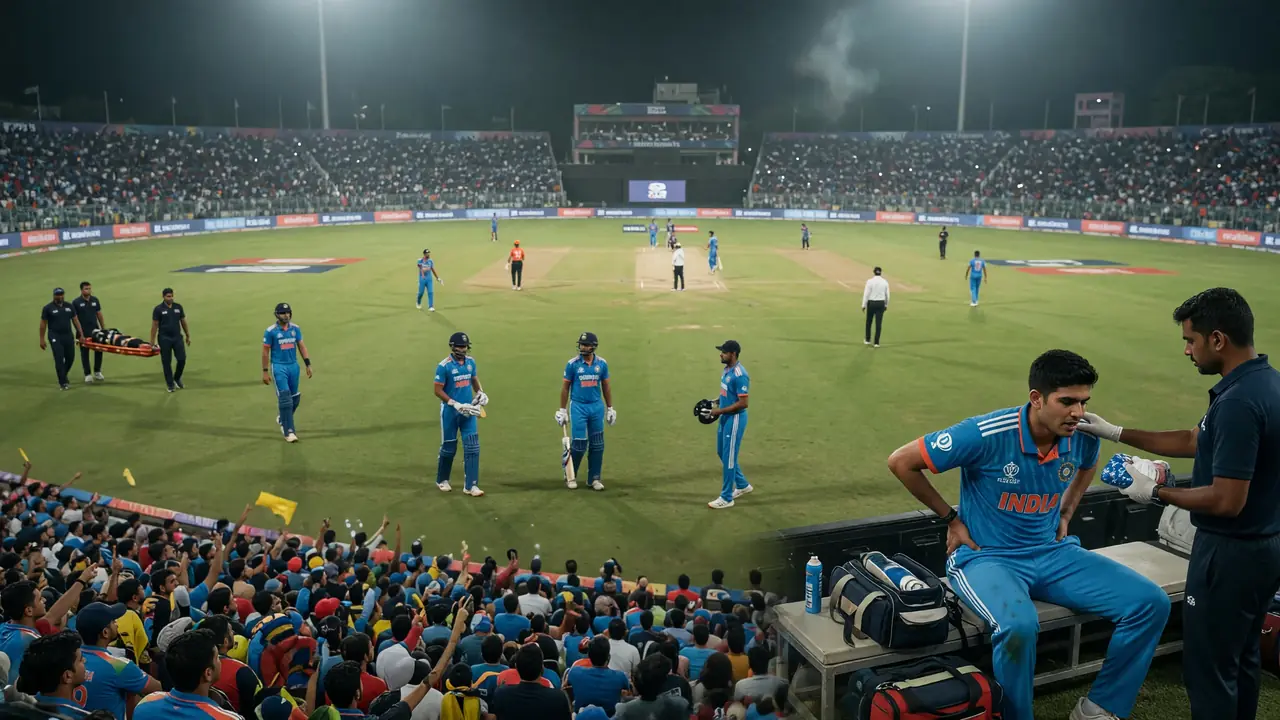
India lost the three-match ODI series against England 2–1 in July 2026. The scoreline alone would have been enough to force a review. What turned the debrief into something sharper was the casualty list sitting beside it. By the time the sides reached Lord's for the decider, captain Shubman Gill said at least five players from the original touring party were unavailable, and he framed the absences as a fitness problem the group had to confront rather than a run of bad luck.
The comments, carried in a Yahoo Sports archive piece dated 20 July 2026, arrived after a white-ball stretch in which India's combinations had been rewritten almost weekly. Fast bowlers, all-rounders and middle-order batters all dropped out at different points of the calendar. Some injuries began in the IPL. Others arrived on the England tour itself. Gill's point was not that any single case was avoidable; it was that the volume of cases had become a pattern the side could no longer treat as noise.
For fantasy managers and franchise scouts who track Indian player availability across formats, that mid-July moment still reads as a useful baseline. It captured where several high-value names actually stood after a long domestic season and a compressed international window, and it put a public label on a problem that had been visible in team sheets for months.
Bumrah's left knee and the Lord's ceiling
Jasprit Bumrah's absence from the Lord's ODI was the most visible single omission of the series. He sustained an impact injury while fielding in the Cardiff ODI, left-knee swelling followed, and he was ruled out of the decider. England then piled up 387. The sequence is simple enough to recite, but the practical effect was larger than one missed spell: India lost its most reliable new-ball and death option on the biggest stage of the tour, and the attack that replaced him had already been thinned by earlier withdrawals.
Bumrah's workload management has been a standing conversation in Indian cricket for several seasons. What mattered in July 2026 was that the knee issue was not a planned rest window. It was an acute reaction to a fielding impact, arriving inside a series India was already trying to salvage. For IPL franchises that budget around his availability in the following domestic cycle, the distinction between managed rest and reactive swelling is the whole story. Managed rest can be scheduled. Reactive swelling cannot.
Hardik Pandya's eleven-match gap
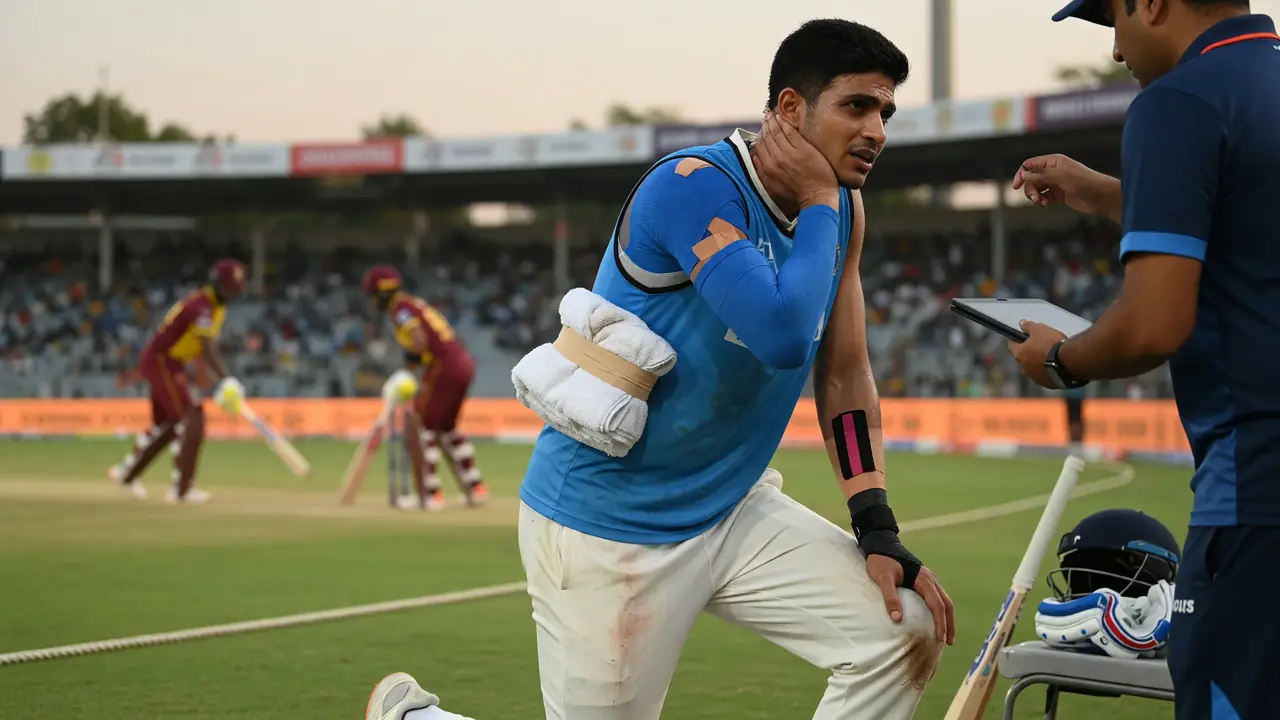
Hardik Pandya missed eleven internationals in 2026. The list covered three ODIs against Afghanistan, five T20Is against England, and the three ODIs against England. The chain began with back spasms during the IPL and continued with a quadriceps strain sustained while he was already in rehabilitation at the BCCI Centre of Excellence. That second injury is the detail that turns a short absence into a multi-series gap: the rehab itself produced another soft-tissue problem before he could return to match load.
Pandya's value in white-ball cricket sits in the overlap of lower-order batting, middle-overs bowling and fielding intensity. Remove him for eleven matches and the captaincy group has to invent three separate replacements rather than one. The IPL spasms also matter beyond the national team, because franchise balance sheets and fantasy salary models still price him as a premium multi-skill asset. An eleven-match international hole in a single calendar year is a hard signal that availability, not ceiling, was the binding constraint through the first half of 2026.
Kohli's hamstring after the IPL final
Virat Kohli suffered a hamstring injury in the IPL 2026 final in late May. He missed the Afghanistan series that followed and needed a late fitness clearance to join the England tour. The timeline is short and unforgiving: a final in May, a bilateral series immediately after, and a UK white-ball assignment with little margin for a cautious rebuild. That he travelled at all was itself a management decision under pressure rather than a routine recovery pathway.
Hamstring injuries in batters of Kohli's age profile usually force a choice between protecting the muscle for the next block and accepting a slightly reduced movement package in the short term. The late clearance for England suggests the medical group chose the second path once he passed the necessary tests. For readers who watched the IPL final and then tracked the Afghanistan omissions, the England tour clearance closed one chapter without erasing the underlying load question that started it.
Harshit Rana's double setback
Harshit Rana's 2026 file is a study in stacked soft-tissue problems. Earlier in the year he suffered a right-knee lateral meniscus tear that ruled him out of the IPL and the Afghanistan series. He returned for the England T20Is, then picked up a Grade 1 right hamstring strain in the third T20I and missed the England ODIs. Two different body regions, two different windows, one continuous availability problem.
A Grade 1 hamstring strain is not, by itself, a long-term career event. Layered on top of a meniscus tear that had already cost him the domestic peak of the year, it becomes a season-defining sequence. Young quicks who miss an entire IPL and then lose the next ODI block are effectively removed from the national selection conversation for half a calendar year. That is the practical meaning of Rana's 2026 record, independent of any longer medical prognosis that was not public at the time of the Yahoo Sports report.
Washington Sundar, Harsh Dubey and the Cardiff fielding cost
Washington Sundar pulled a hamstring while fielding in the second ODI at Cardiff on 16 July and was withdrawn. Harsh Dubey was flown in as emergency cover for Lord's. The detail that matters here is the mechanism: another fielding injury, inside the same series that had already taken Bumrah via a fielding impact. India's white-ball fielding intensity is part of its brand. In July 2026 it was also part of the casualty list.
Sundar's role as a control spinner who can bat in the middle order is hard to replace on short notice. Dubey's call-up solved the numbers problem on the team sheet; it did not restore the same match-up profile against England's middle order at Lord's. Emergency cover is exactly what the phrase implies: a body in the dressing room, not a like-for-like tactical substitute.
Varun Chakaravarthy and the Zimbabwe window
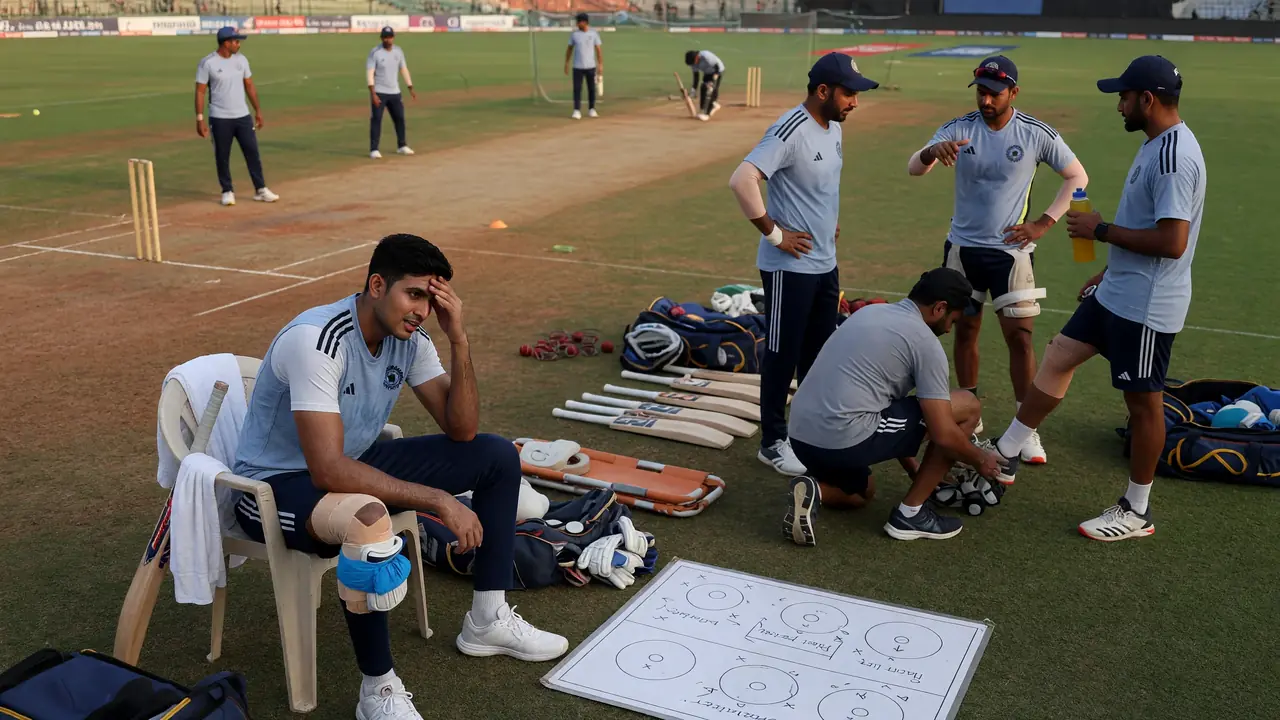
Varun Chakaravarthy sustained a Grade 2 hamstring strain in the third T20I against England. He was set to miss the five-match T20I series against Zimbabwe and was replaced by Ravi Bishnoi. A Grade 2 strain is a more serious soft-tissue event than Rana's Grade 1; the Zimbabwe omission was the immediate, confirmed consequence rather than a speculative rest.
Bishnoi's inclusion kept India's wrist-spin option open for the Zimbabwe assignment, but the selection change also underlined how thin the specialist spin bench had become once Chakaravarthy joined the injured list. For franchise fantasy users who had banked on Chakaravarthy's IPL rhythm carrying into the international window, the Grade 2 diagnosis closed that bridge for the next bilateral block.
Nitish Kumar Reddy's lost UK tour
Nitish Kumar Reddy aggravated a left-quad injury while bowling in the Afghanistan ODIs. He missed eight internationals, including his maiden senior white-ball tour of the United Kingdom, and was replaced by Suryansh Shedge. The recovery outlook reported at the time was four to six weeks. For a young all-rounder, missing a first full UK white-ball assignment is not only a numbers gap; it is a developmental window that does not automatically reappear on the next calendar.
The bowling aggravation is the telling detail. Reddy's appeal sits in the dual role of batting depth and seam-up overs. An injury sustained while bowling is a direct tax on the part of his game selectors most want to test in English conditions. Shedge's call-up filled a roster line. It did not restore the same long-term experiment India had planned around Reddy on that tour.
Gill's own neck problem, managed in plain sight
Gill himself managed a nagging neck injury from late December that affected his crease movement. In the first ODI at Birmingham he retired hurt on 80 off 75. He did not miss a 2026 fixture, which is a different kind of data point from the absences around him. The captain stayed available while repeatedly managing discomfort that was visible enough to force a mid-innings retirement on a significant score.
That context changes how his Lord's fitness comments land. He was not speaking as a fully healthy captain surveying a broken squad from a distance. He was speaking as a player who had been managing his own limitation for months while watching senior teammates drop out of successive series. The public call for better fitness was, in that light, both a leadership statement and a description of the environment he had been captaining inside.
What the mid-year ledger actually showed
Put the named cases side by side and the 2026 first-half pattern is hard to miss. Bumrah's knee swelling and Sundar's hamstring both came from fielding in the England ODIs. Pandya's year was defined by an IPL back issue that became a quad strain in rehab. Kohli's hamstring began in the IPL final. Rana stacked a meniscus tear and a Grade 1 hamstring. Chakaravarthy's Grade 2 hamstring removed him from the Zimbabwe T20Is. Reddy's left-quad aggravation cost him eight internationals and his first senior white-ball UK tour. Gill kept playing through a neck problem that still forced him to retire hurt in Birmingham.
None of those facts require an external theory about training culture to be useful. They are enough, on their own, to explain why India reached Lord's short of the side that had been named at the start of the England assignment, and why Gill chose fitness language rather than misfortune language when he spoke after the series loss. The 2–1 scoreline was the public result. The injury register was the private constraint that shaped every XI along the way.
Why the episode still matters for IPL fantasy readers
Fantasy cricket pricing often lags medical reality by a full cycle. Players who miss large international blocks in mid-year can still open the next IPL auction conversation at last-season salaries if the market treats the absences as noise. The July 2026 ledger argues against that habit. Pandya's eleven-match hole, Rana's lost IPL, Reddy's eight-match gap and Chakaravarthy's Grade 2 strain are not noise. They are availability data.
The cleaner read for contest players is to separate ceiling from minutes. Kohli's late England clearance and Gill's unbroken fixture list show that some names can stay selectable even while managing tissue issues. Bumrah's reactive knee swelling and Pandya's rehab setback show the opposite: minutes can vanish inside a single series without a long public build-up. Building contest sides around the second group without a contingency plan is how mid-tournament replacements get forced at the worst price.
Our rolling IPL news coverage keeps the availability story tied to franchise and contest decisions rather than treating medical updates as background colour. The July 2026 England series remains one of the clearest recent snapshots of how quickly an Indian white-ball squad can be rewritten when soft-tissue problems arrive in clusters.
What the archive confirms, and what it does not
The verified record from the 20 July 2026 Yahoo Sports report supports the series result, Gill's five-player absence comment, and the individual injury descriptions summarised above. It does not, by itself, establish longer-term recovery timelines beyond Reddy's reported four-to-six-week outlook, nor does it document later selection decisions after the England ODIs closed. Those later questions sit outside this retrospective.
The durable takeaway is narrower and more useful. In the middle of 2026, India's white-ball depth was tested less by form and more by bodies. Gill said the quiet part out loud after Lord's. The named absences explain why he felt able to say it.
Injury ledger from the July 2026 record
Frequently asked questions
What did Shubman Gill say after the England ODI series?
Why did Jasprit Bumrah miss the Lord's ODI?
How many internationals did Hardik Pandya miss in 2026?
When did Virat Kohli's hamstring injury start?
Did Shubman Gill miss any matches in 2026 because of his neck injury?
Build your IPL fantasy team today
Use code INDIA100 for a Rs 100 welcome bonus.
Legacy of the July 2026 fitness reckoning
The England ODI series is now a fixed point on the 2026 calendar rather than a live selection puzzle. Its lasting value is documentary: a named register of who was unavailable, how the injuries arrived, and why the captain chose fitness language after a 2–1 defeat. Later squads will be judged against whether that mid-year cluster looked like an outlier or the start of a longer availability problem.
For IPL franchise planners and contest players, the comparison that still pays is simple. Stack the July absences against each player's eventual domestic workload when the next league season opens. Names who absorb international soft-tissue hits and still produce full IPL seasons belong in one pricing bucket. Names who compound absences across both stages belong in another. Gill's warning did not invent that split. It made the split impossible to ignore.